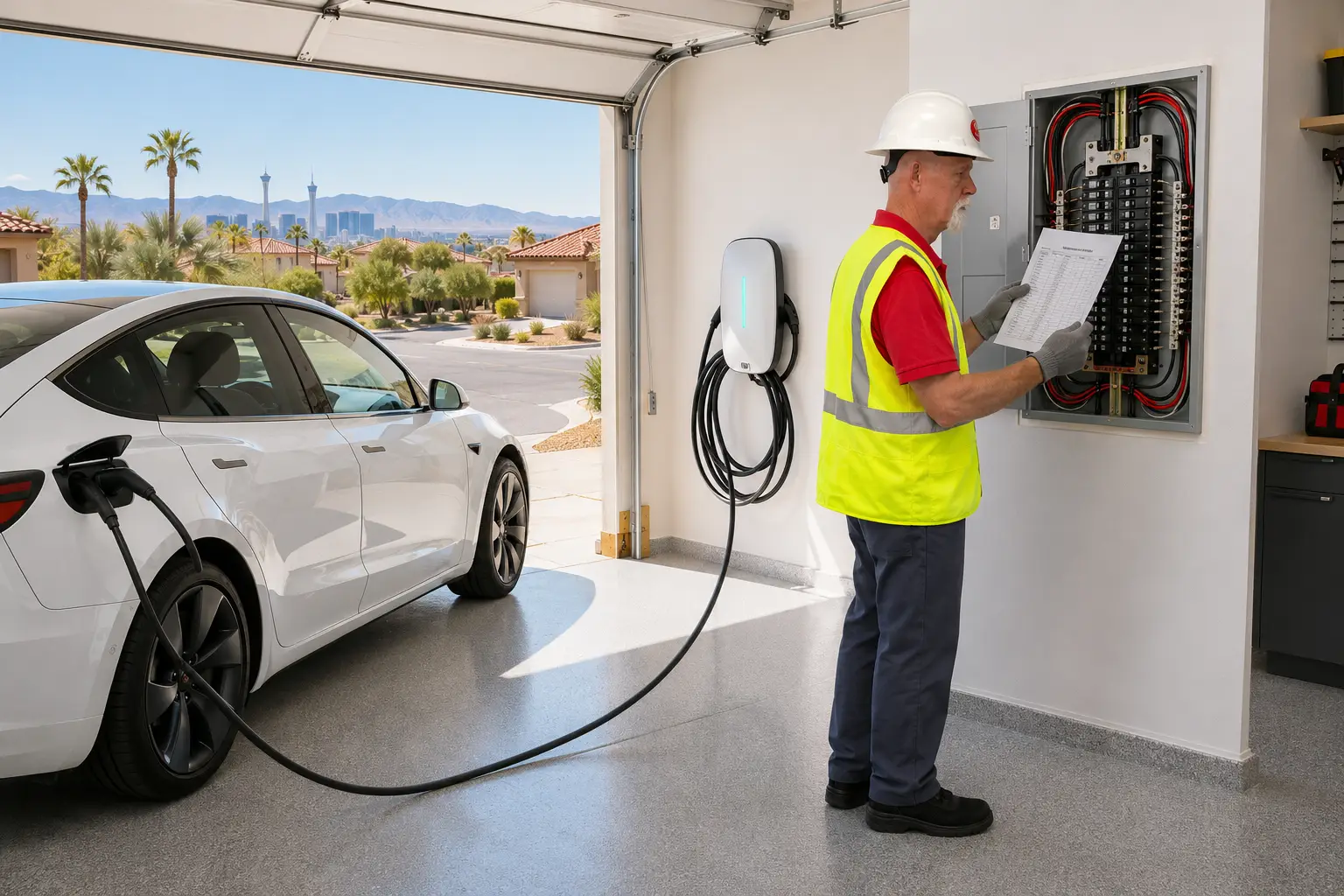
What Does It Really Cost to Install an EV Charging Station in Nevada?
Electric vehicles are everywhere in Nevada, especially around Las Vegas. And once you bring that EV home, one big question quickly follows:
What is the real install EV charging station cost?
Between equipment, permits, electrical upgrades, rebates, and tax credits, the numbers can feel all over the map. Some homeowners pay under $1,000. Others invest $5,000 or more.
At PDQ Electric, we’ve installed EV chargers across Southern Nevada and helped homeowners navigate everything from panel upgrades to rebate paperwork. In this guide, we’ll break down:
- Real-world installation cost ranges
- EV charger circuit requirements
- Nevada permit expectations
- How the federal EV tax credit home charger incentive works
- Available utility rebates
- How to choose the best electrician EV charger installation team
Let’s plug in and get started.
Understanding Install EV Charging Station Cost in Nevada
The total cost depends on three main factors:
- Charger equipment
- Electrical labor and materials
- Panel upgrades or service changes (if needed)
Here’s what Nevada homeowners can expect.
Equipment Costs: Level 2 Chargers
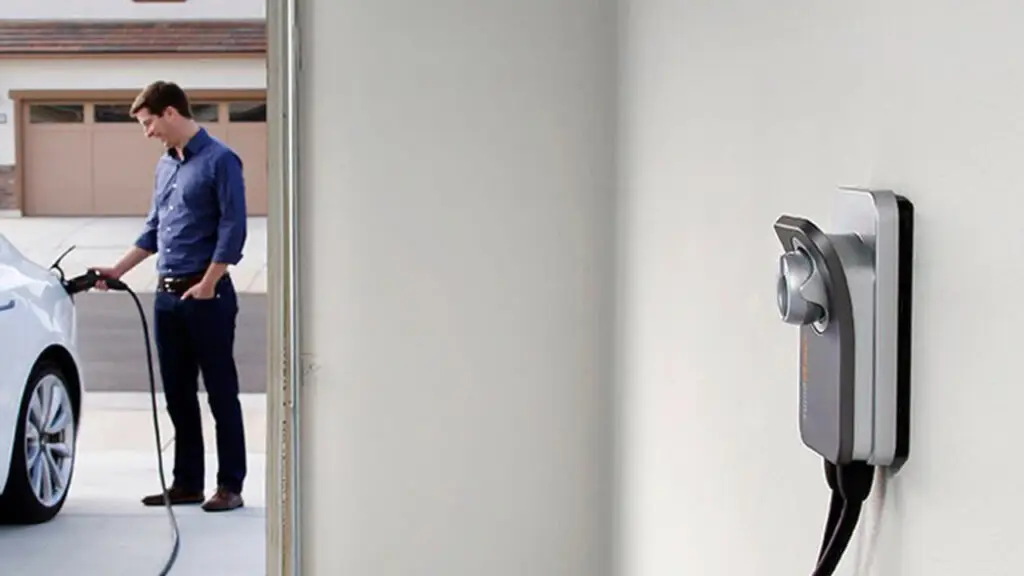
Most residential Level 2 chargers cost between:
$400 – $1,200
Popular models include:
- ChargePoint (Home Flex)
- Enel X (JuiceBox series)
- ClipperCreek (HCS models)
Price differences typically come down to:
- WiFi connectivity
- App monitoring
- Adjustable amperage
- Load sharing for multiple EVs
- Weatherproof ratings
Pro tip: Always match the charger’s amperage to your home’s electrical capacity.
Labor & Installation Costs in Nevada
Here’s where install EV charging station cost can vary significantly.
Simple Installation (Most Common)
- Short wire run (under 25 feet)
- Existing 200-amp panel
- Available breaker space
- Garage install
Estimated Total: $900 – $1,800
Moderate Installation
- Longer conduit run
- Attic routing or exterior wall mounting
- Minor panel modifications
Estimated Total: $1,500 – $3,500
Complex Installation
- Panel upgrade required
- Subpanel installation
- Trenching for detached garage
- Service upgrade coordination
Estimated Total: $3,000 – $6,500+
If your home has an older 100-amp or 60-amp panel, this is where costs increase.
As outlined in PDQ Electric’s Nevada installation guide , panel capacity and distance from the main service are the biggest cost drivers in Las Vegas homes.
EV Charger Circuit Requirements (What Homeowners Need to Know)
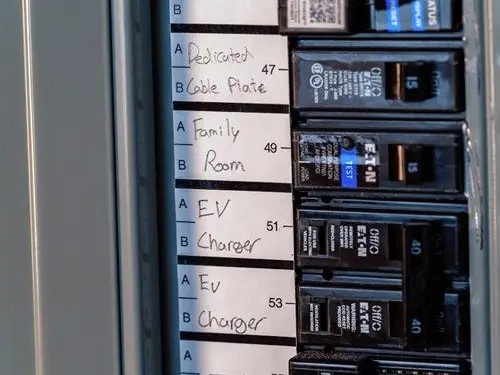
Level 2 chargers require:
- 240-volt dedicated circuit
- Properly sized breaker
- Correct wire gauge
- Permit and inspection approval
Common Setup Examples
| Charger Output | Typical Breaker | Typical Wire |
|---|---|---|
| 32 amps | 40-amp | 8 AWG copper |
| 40 amps | 50-amp | 6 AWG copper |
| 48 amps | 60-amp | 6 AWG copper |
Because EV chargers draw continuous power for hours, they must follow the 125% continuous load rule under electrical code.
This is why hiring the best electrician EV charger installation professional matters. Incorrect breaker sizing is one of the most common inspection failures.
Home EV Charger Permit Nevada: What to Expect
Yes — most installs require a permit in Clark County and the City of Las Vegas.
Typical permit costs:
$50 – $300
Inspection timeline:
- Permit approval: Same day to 2 weeks
- Inspection scheduling: 1–7 days after installation
Inspectors check:
- Dedicated circuit
- Breaker size compliance
- Grounding and bonding
- Proper labeling
- Secure mounting
Skipping permits can void rebates and create insurance issues. It’s not worth the risk.
Nevada Rebates for EV Charger Installation
Nevada homeowners should always check for current rebate programs through NV Energy.
Rebate programs change, but generally require:
- Proof of Nevada residency
- Licensed electrician installation
- Itemized invoice
- Charger model and serial number
- Application submission within program deadline
PDQ Electric provides rebate-ready documentation to simplify the process.
Federal EV Tax Credit Home Charger Incentive
Federal incentives for EV charger installation have changed over the years.
Historically, homeowners could claim:
- A percentage-based tax credit
- Up to a capped amount (often $1,000)
To determine eligibility for the federal EV tax credit home charger program, homeowners should review current IRS guidelines or consult a tax professional.
Important:
Utility rebates may reduce the amount eligible for federal tax calculation, so documentation is key.
Always keep:
- Paid invoice
- Charger model details
- Installation date
- Electrician license number
Real-World Nevada Installation Examples
Scenario 1: Newer Summerlin Home
- 200-amp panel
- Charger installed next to panel
- 40-amp breaker
Total Cost: $1,200
No panel upgrades required.
Scenario 2: Older Henderson Home
- 100-amp panel
- Needed 200-amp upgrade
- 50-foot conduit run
Total Cost: $4,800
Majority of cost = panel upgrade.
Scenario 3: Two EV Household in Las Vegas
- Smart load-sharing charger
- Avoided service upgrade
- Dual charging capability
Total Cost: $3,200
Load management saved thousands compared to upgrading service.
How to Choose the Best Electrician EV Charger Installation Company
Not all electricians specialize in EV systems.
Here’s what to look for:
- Nevada licensed electrical contractor
- Experience with EV charger circuit requirements
- Familiarity with local permit process
- Rebate documentation support
- Transparent, itemized quotes
Warning signs:
- No permit offered
- Vague pricing
- No license verification
- Cash-only estimates
PDQ Electric provides:
- 24/7 residential electrical services
- Permit handling
- Inspection coordination
- Rebate documentation assistance
- Maintenance support
Project Timeline: What to Expect
Typical timeline:
- Initial call
- Site visit within days
- Permit submission
- Installation (1 day for simple installs)
- Inspection
- Rebate submission
Simple projects can be completed in under a week.
Complex projects involving panel upgrades may take 3–6 weeks depending on permit volume.
Cost-Saving Tips for Nevada Homeowners
Want to reduce install EV charging station cost?
- Install near your main panel
- Choose smart load-sharing systems
- Combine other electrical upgrades in one visit
- Apply for rebates immediately
- Keep documentation organized
Small decisions can save thousands.
Frequently Asked Questions
How much does it cost to install an EV charging station in Nevada?
Most homeowners pay between $900 and $3,500, depending on panel capacity and installation complexity.
Do I need a permit for a home EV charger in Nevada?
Yes. Most Level 2 installations require a residential electrical permit and inspection.
What size breaker is needed for a Level 2 charger?
Typically 40 to 60 amps, depending on charger output and manufacturer requirements.
Can I claim a federal tax credit?
Possibly. Eligibility depends on current federal guidelines. Always verify before filing.
How long does installation take?
Simple installs: 4–8 hours
Complex installs: 1–3 days (plus permit timeline)
Is Installing a Level 2 Charger Worth It?
If you drive an EV daily, a Level 2 charger is absolutely worth it.
You get:
- Faster charging
- Lower long-term energy costs
- Increased home value
- Daily convenience
And when installed properly by a licensed electrician, it’s safe, code-compliant, and rebate-ready.
Ready to Install Your EV Charger?
If you want a clear, itemized quote and help navigating rebates, permits, and tax credits…
Contact PDQ for their EV charger Installation or maintenance today.
Our licensed Nevada electricians handle everything from panel upgrades to final inspection, and we make the paperwork easy.
Your EV deserves a reliable home charging setup. Let’s make it happen.