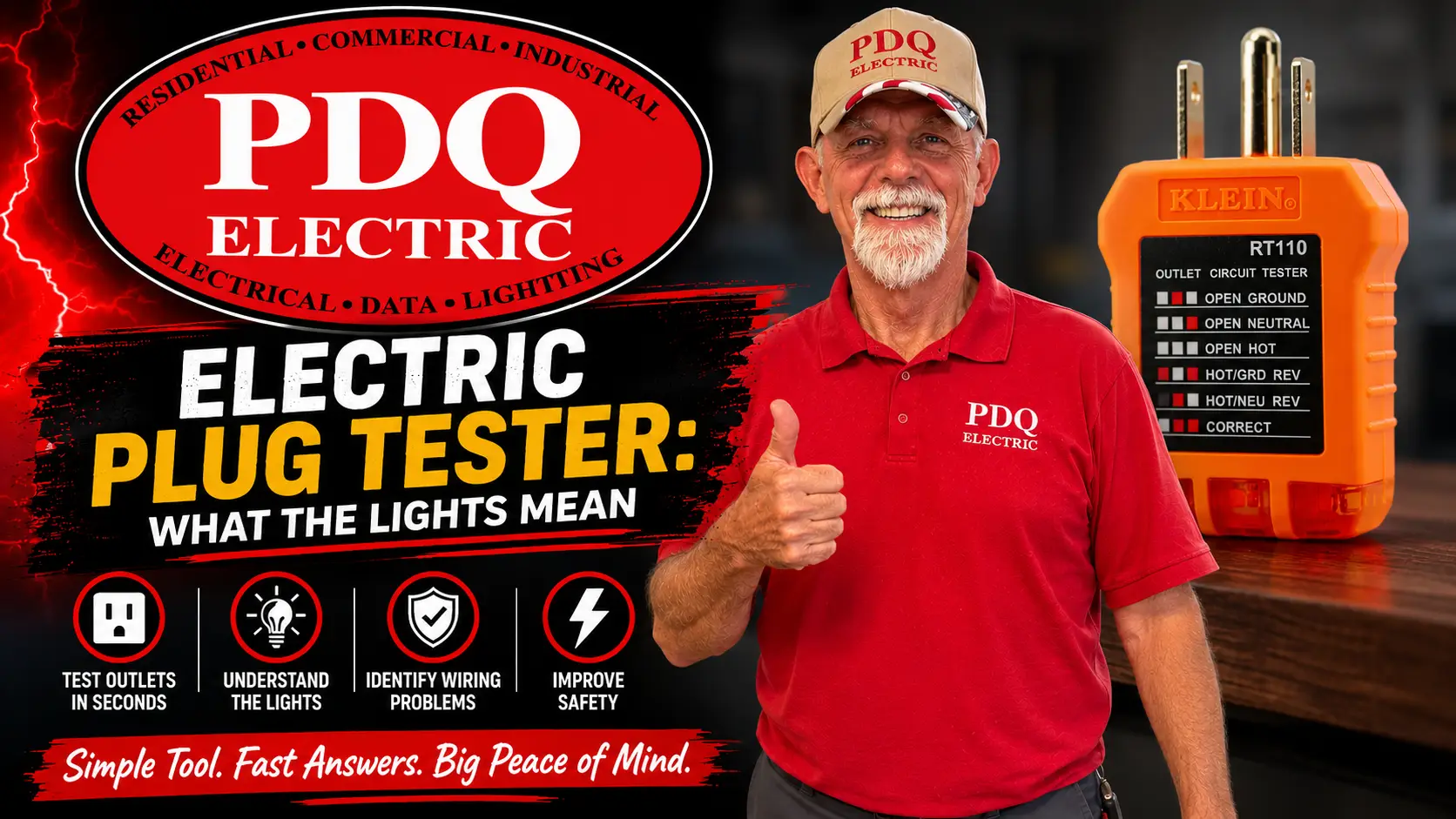
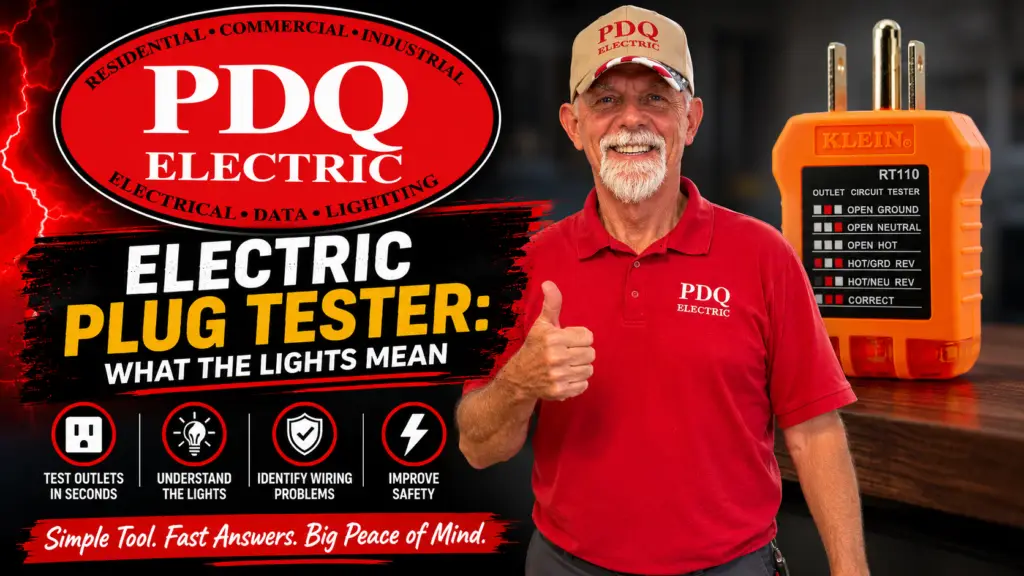
If you’ve ever wondered whether your electrical outlets are wired correctly, one of the fastest ways to check is with a simple electric plug tester. In this educational video, Shane Hayes from PDQ Electric explains how electricians use plug testers to quickly identify common outlet wiring issues and improve electrical safety in homes and businesses.
Whether you’re a homeowner, DIY enthusiast, or simply curious about electrical safety, understanding what the lights on a plug tester mean can help you recognize potential problems before they become dangerous.
Watch the Video: Electric Plug Tester Explained
In this video, Shane Hayes from PDQ Electric walks through:
- How an electric plug tester works
- What the different light patterns mean
- Common outlet wiring problems
- The difference between standard testers and GFCI testers
- Why electricians still use these tools every day
This quick guide helps homeowners better understand their outlets and when it’s time to call a professional electrician.
What Is an Electric Plug Tester?
An electric plug tester is a small handheld device electricians use to test standard electrical outlets. By plugging the tester into an outlet, the device uses light patterns to indicate whether the receptacle is wired correctly or if there are electrical issues present.
These testers are:
- Affordable
- Easy to use
- Fast for troubleshooting
- Helpful for identifying outlet wiring issues
Electricians often use them during inspections, repairs, remodels, and troubleshooting service calls.
Common Outlet Problems a Plug Tester Can Detect
A plug tester can identify several common wiring conditions, including:
Open Ground
An open ground means the outlet does not have a proper grounding path. This issue is common in older homes with outdated wiring systems.
Open Neutral
An open neutral occurs when the neutral wire becomes disconnected somewhere on the circuit. This can cause outlets to stop working or create unpredictable electrical behavior.
Reverse Polarity
Reverse polarity means the hot and neutral wires are reversed. Even if the outlet still works, this condition can create serious safety concerns.
Hot/Ground Reverse
This condition may indicate improper wiring or a failed GFCI somewhere upstream on the circuit.
Why GFCI Plug Testers Matter
Some plug testers include a built-in GFCI test button. These testers can help verify whether GFCI-protected outlets are functioning properly.
GFCI outlets are commonly installed in:
- Kitchens
- Bathrooms
- Garages
- Laundry rooms
- Outdoor locations
Pressing the test button simulates a fault condition and should trip the outlet if the protection is working correctly.
Learn more about GFCI outlet safety from the National Electrical Manufacturers Association (NEMA)
Important Limitations of Plug Testers
While plug testers are useful diagnostic tools, they are not a complete electrical inspection.
A tester showing “correct” only means it does not detect common wiring issues at that specific outlet. It does not guarantee the entire circuit is safe.
Professional electricians often use additional tools such as:
- Multimeters
- Circuit analyzers
- Voltage testers
- Load testing equipment
If you receive unusual readings or suspect electrical issues, it’s best to contact a licensed electrician for proper troubleshooting.
When Should You Test Your Outlets?
Testing outlets is especially important if:
- You recently moved into an older home
- An outlet stops working properly
- Lights flicker unexpectedly
- A GFCI trips frequently
- You completed electrical repairs or renovations
- You suspect unsafe wiring conditions
Routine outlet testing can help catch problems early and improve overall electrical safety.
Frequently Asked Questions About Electric Plug Testers
What does an electric plug tester do?
An electric plug tester checks outlet wiring conditions and helps identify common electrical problems using indicator lights.
Can a plug tester tell if an outlet is completely safe?
No. A plug tester only identifies certain wiring issues at the outlet being tested. It is not a full electrical inspection.
Are plug testers safe for homeowners to use?
Yes, most plug testers are designed for basic homeowner use. However, any serious electrical troubleshooting should be handled by a licensed electrician.
What does reverse polarity mean?
Reverse polarity means the hot and neutral wires are swapped. This can create shock hazards and unsafe electrical conditions.
Why do electricians still use plug testers?
Electricians use plug testers because they provide quick, convenient diagnostic information during inspections and troubleshooting.
Need Help Troubleshooting Outlet Problems?
If your outlets are showing unusual readings, tripping breakers, or experiencing electrical issues, PDQ Electric is here to help. Our experienced Las Vegas electricians can diagnose wiring problems, inspect circuits, and ensure your electrical system is safe and functioning properly.
Contact PDQ Electric today to schedule professional electrical service and keep your home or business powered safely.