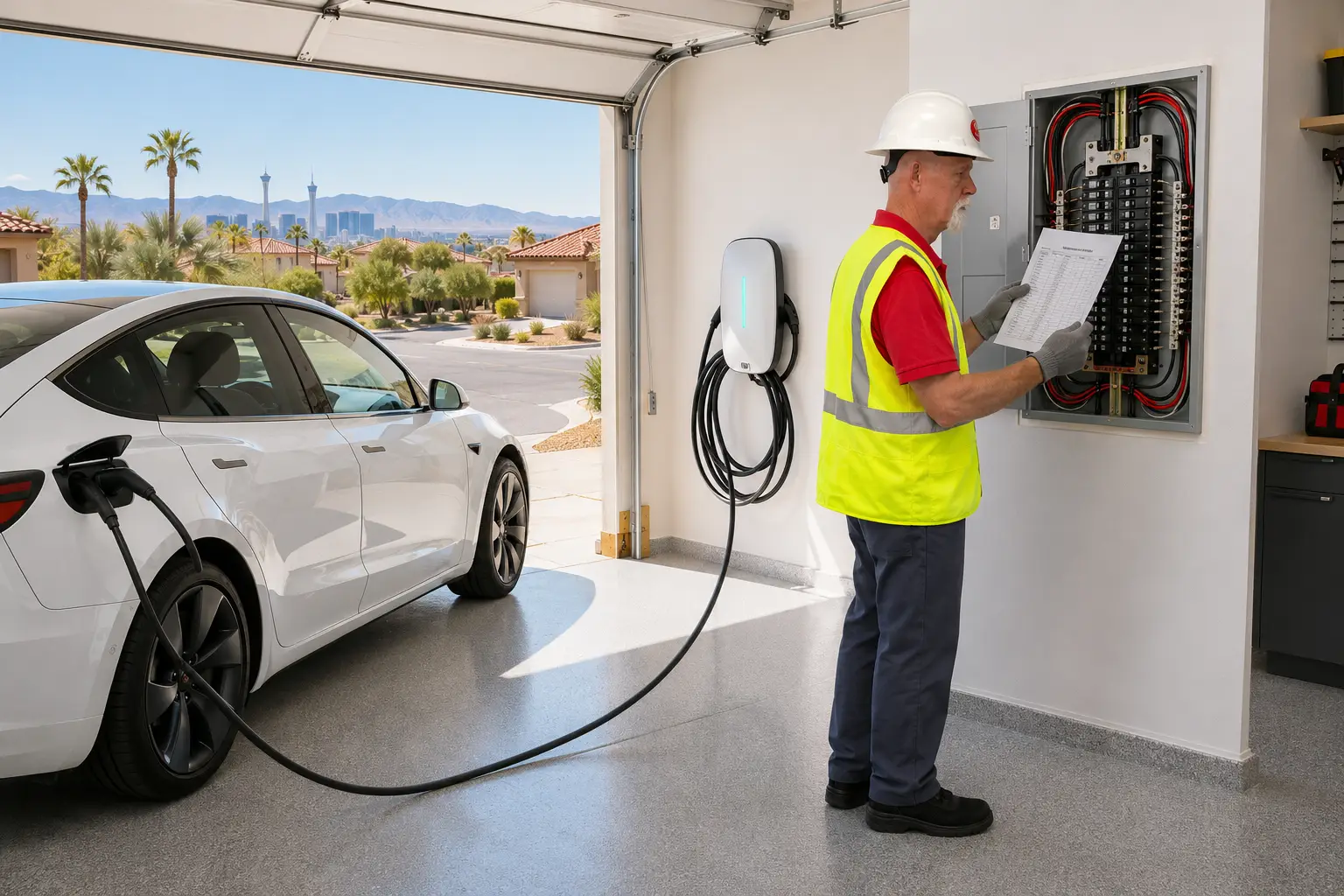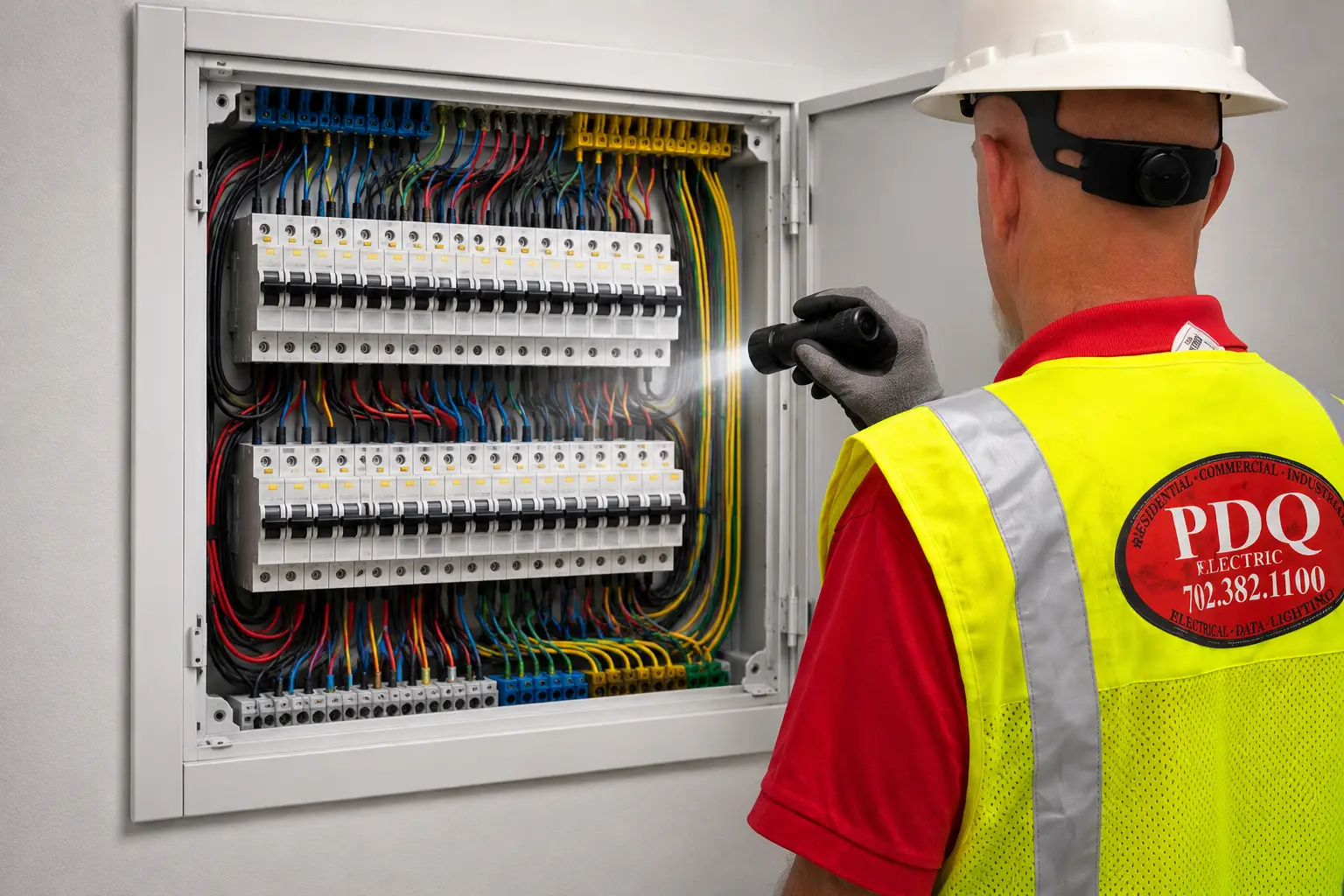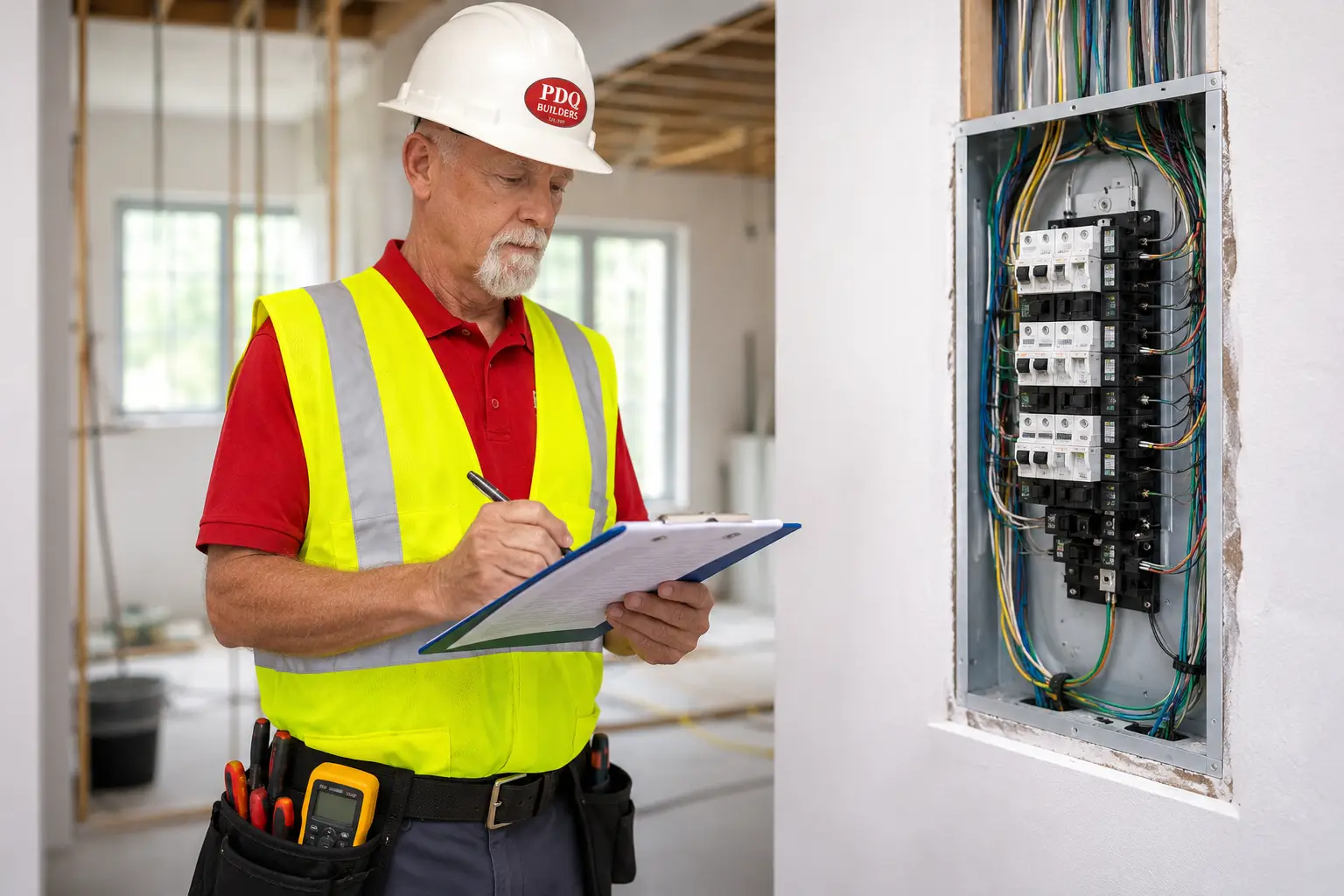
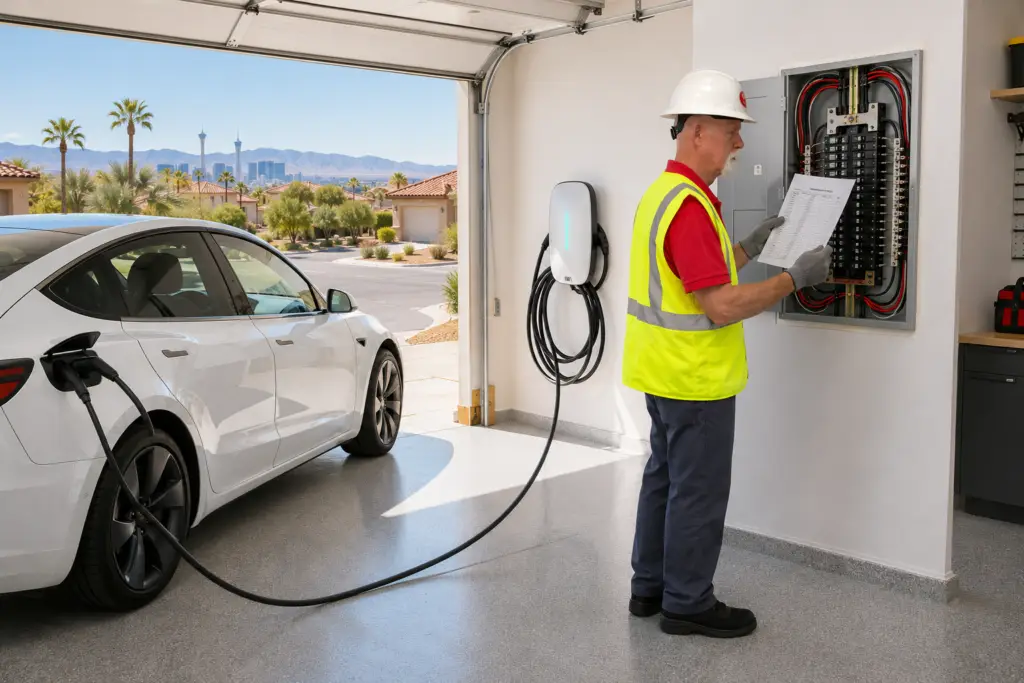
Buying an electric vehicle is exciting. Realizing your home’s electrical panel may have opinions about that new charger? Slightly less exciting.
If you are asking whether your electrical panel can handle a home EV charger, you are not alone. Many homeowners discover that charging an EV is not just about picking the charger with the sleekest app. It starts with the electrical system already powering your lights, appliances, AC, and everything else that makes your house feel like home.
For homeowners researching panel upgrade costs for EV charging in Las Vegas, the real question is usually this: Can I install a charger with my current panel, or do I need to upgrade first? The answer depends on your panel size, available capacity, breaker space, and overall electrical load.
This practical checklist will walk you through what to look for, what warning signs matter, and when it makes sense to call a licensed electrician. By the end, you will have a clearer idea of whether your current panel is ready for EV charging or whether a service upgrade is the smarter move.
Why Your Electrical Panel Matters for EV Charging
A home EV charger is not a small plug-in gadget. It is a significant electrical load that needs to be added safely to your home’s existing system.
Most Level 2 home chargers require a dedicated 240-volt circuit. That means your panel needs enough capacity to support the charger in addition to the rest of your home’s electrical demands. If your panel is already close to its limit, adding an EV charger could overload the system or create safety issues.
That is why homeowners often ask, do I need a panel upgrade for EV charger installation? In many cases, maybe not. But in others, especially in older homes or homes with 100-amp service, the answer can absolutely be yes.
Think of your panel as your home’s traffic controller. If too many electrical demands try to move through at once, things get messy fast. And unlike a crowded coffee shop line, electrical overload is not charming.
Checklist Item 1: What Size Is Your Main Electrical Panel?
The first thing to check is your panel’s total amperage capacity. Most homes have one of these service sizes:
100-amp panel
Common in older homes. This may be enough for smaller households with modest electrical use, but it can become tight once you add a Level 2 EV charger.
125-amp or 150-amp panel
These provide more room and may support EV charging depending on the home’s overall electrical demand.
200-amp panel
Often ideal for modern homes, especially those with EV chargers, electric dryers, pools, hot tubs, or larger HVAC systems.
If you are unsure, look at the main breaker in the electrical panel. It is usually labeled with the service size, such as 100, 125, 150, or 200.
Understanding your home panel capacity for EV charging is the foundation of the whole decision. Two homes with the same panel size may still have very different available capacity depending on what else they are powering every day.
Checklist Item 2: Do You Have Available Breaker Space?
Even if your panel has enough total capacity, it still needs physical space for a new dedicated breaker.
A Level 2 EV charger usually requires a double-pole breaker. If your panel is already full, that does not automatically mean you need a full panel replacement, but it does mean an electrician needs to evaluate your options.
Possible solutions may include:
- Adding the charger if there is already open space
- Reorganizing existing circuits
- Using approved tandem breakers, where allowed
- Installing a subpanel
- Upgrading the main panel
This is one reason why Ineed a panel upgrade for EV charger is not always a simple yes-or-no question. Sometimes the issue is capacity. Most of the time it is space. Maybe it is both.
Checklist Item 3: What Charger Amperage Are You Planning to Install?
Not every EV charger pulls the same amount of power. One of the most important considerations is EV charger circuit breaker size for homes.
Here is the basic rule: continuous loads like EV charging are usually sized at 125% of the charger’s output.
For example:
- A 32-amp charger typically needs a 40-amp breaker
- A 40-amp charger typically needs a 50-amp breaker
- A 48-amp charger typically needs a 60-amp breaker
The faster the charger, the more panel capacity it uses.
That means if your home is already running central AC, an electric oven, dryer, and water heater, a high-amperage charger may push your panel beyond what it can safely support.
This is why an electrician does not just ask, “Do you want an EV charger?” They ask, “What size charger do you want, and what is your home already using?”
Checklist Item 4: What Else Is Your Panel Powering?
Your electrical panel does not care that your EV is very eco-friendly. It only cares about total demand.
To determine home panel capacity for EV charging, you need to look at the big loads already in the home, such as:
Major electrical loads to consider
- Air conditioning
- Electric range or oven
- Electric dryer
- Water heater
- Pool equipment
- Hot tub or spa
- Workshop equipment
- Solar inverter connections
- Additional refrigerators or freezers
A home with gas appliances may have much more room for EV charging than a fully electric home with similar panel size. That is why load calculations matter so much.
A licensed electrician can perform a formal load calculation to see whether your system can safely accommodate the charger without exceeding capacity.
Checklist Item 5: Do You Have a 100-Amp Panel?
This is one of the most common concerns for EV charger installation.
Many homeowners specifically ask about 100 amp panel requirements for EV charger setups because 100-amp service is often where capacity questions become more serious.
Can a 100-amp panel support an EV charger?
Yes, sometimes. But not always.
A 100-amp panel may support EV charging if:
- Your home has lower overall electrical demand
- You use gas for major appliances
- You choose a lower-amperage charger
- A load calculation shows adequate spare capacity
A 100-amp panel may not be enough if:
- You have electric HVAC, dryer, oven, or water heater
- The panel is already near capacity
- You want a higher-speed Level 2 charger
- The panel is older or in poor condition
So when homeowners ask about 100 amp panel requirements for EV charger installation, the real answer is that it depends on the actual load, not just the number on the breaker.
Still, if your home has a 100-amp panel and several major electrical appliances, there is a good chance you should at least explore the panel upgrade cost for EV charging in Las Vegas before moving forward.
Checklist Item 6: Is Your Panel Older, Outdated, or Showing Warning Signs?
Capacity is not the only issue. Condition matters too.
Even if your panel technically has enough room for a charger, an older or worn-out panel may not be the right place to add new demand.
Warning signs your panel may need attention
- Frequent breaker trips
- Flickering or dimming lights
- Warm panel cover
- Buzzing sounds
- Rust or corrosion
- Double-tapped breakers
- Recalled or obsolete panel brands
- Signs of previous overheating
If any of these issues are present, it is smart to address them before adding EV charging equipment. A charger adds a sustained electrical load, which can expose existing weaknesses in the system.
In situations like this, the question becomes less about convenience and more about safety.
Checklist Item 7: Will a Load Management Solution Help?
In some homes, an electrician may recommend load management instead of a full panel upgrade.
These systems monitor electrical demand and adjust EV charging when the panel is under heavier use. That can help certain homes install a charger even when spare capacity is limited.
This is not the right fit for every property, but it can be a useful alternative when homeowners want to avoid immediate upgrade costs.
Still, for many households, especially those planning for future electrical additions, a panel upgrade can be the better long-term investment. If you are already considering solar, battery storage, or another EV down the road, upgrading once may be smarter than solving the same problem twice.
Real-World Scenario Examples
Scenario 1: Older Las Vegas home with 100-amp service
A homeowner buys their first EV and wants a Level 2 charger in the garage. The home has a 100-amp panel, electric AC, electric dryer, and a full breaker panel. After a load calculation, the electrician determines the panel does not have enough spare capacity for the desired charger. In this case, a service upgrade is the safest path.
Scenario 2: Newer home with 200-amp service
Another homeowner has a newer 200-amp panel with gas appliances and open breaker space. They want a 40-amp charger for overnight charging. The load calculation shows plenty of room, so the charger can be installed without a panel upgrade.
Scenario 3: Homeowner wants the fastest charger possible
A homeowner with a 125-amp panel wants a high-output charger to reduce charging time. The panel may support a lower-amperage charger, but not the faster one they prefer. They must choose between a lower charging rate or upgrading the panel.
These examples show why EV charger circuit breaker size for homes and home panel capacity for EV charging need to be evaluated together, not separately.
When a Panel Upgrade Makes Sense
A panel upgrade is often worth considering when:
- Your home has a 100-amp panel with high electrical demand
- You want a faster Level 2 charger
- Your panel is full or outdated
- You are planning future electrical upgrades
- Safety concerns already exist with the current panel
For many homeowners, understanding panel upgrade cost for EV charging in Las Vegas is about more than today’s charger install. It is about preparing the home for how people live now: more electric vehicles, more devices, and more pressure on older systems.
A properly sized and updated panel can improve safety, support future upgrades, and make your home more functional overall.
Why Professional Evaluation Matters
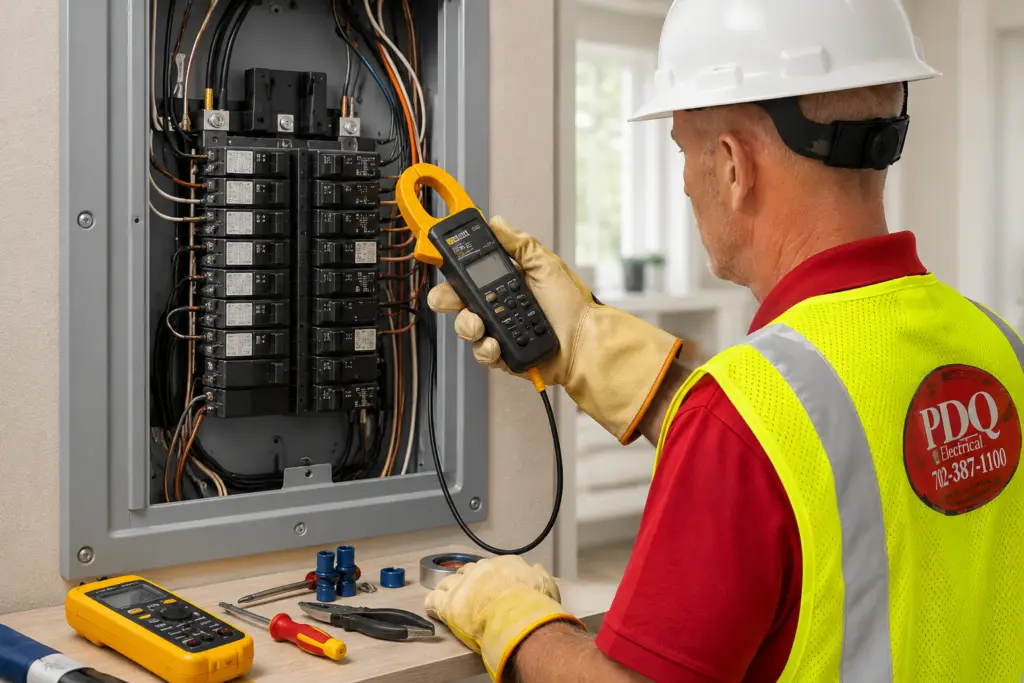
Online checklists are helpful, but they are not a substitute for a licensed electrician performing a proper assessment.
An electrician can:
- Inspect your panel condition
- Check for available breaker space
- Review your service size
- Perform a load calculation
- Determine the correct charger circuit
- Recommend whether an upgrade is needed
This is the best way to answer questions like:
- Do I need a panel upgrade for EV charger installation?
- What is the right EV charger circuit breaker size for homes like mine?
- Does my current home panel capacity for EV charging support the charger I want?
- What are the realistic 100 amp panel requirements for EV charger installation in my home?
The right answer is based on your specific property, not a generic guess.
Choosing the Next Step for Your Home
If your panel has enough capacity, great. You may be ready to move forward with charger installation.
If it does not, that is not bad news. It is just useful information. Knowing where your system stands lets you make a safe decision now instead of discovering the problem after breakers start tripping or installation hits a wall.
For Las Vegas homeowners, the smartest move is to have the panel evaluated before purchasing or installing charging equipment. That way, you know whether your current setup works, whether a lower-amperage charger is the better fit, or whether a panel upgrade will save frustration in the long run.
You can also explore PDQ Electric’s EV charger installation services to learn more about safe, code-compliant home charging solutions.
Frequently Asked Questions
Can I install an EV charger on a 100-amp panel?
Sometimes, yes. It depends on your home’s total electrical demand, your charger size, and whether a load calculation shows enough spare capacity. That is why 100 amp panel requirements for EV charger installation vary from home to home.
Do I need a dedicated breaker for a home EV charger?
Yes. Most Level 2 chargers require a dedicated 240-volt circuit with a properly sized breaker. The exact EV charger circuit breaker size for homes depends on the charger’s amperage rating.
How do I know my home panel capacity for EV charging?
A licensed electrician can inspect your service size, review existing loads, and perform a load calculation to determine your available capacity. That is the most accurate way to assess home panel capacity for EV charging.
Do I need a panel upgrade for EV charger installation in every home?
No. Some homes can support an EV charger with the existing panel. Others need a subpanel, load management, or full upgrade. The answer depends on the panel size, available breaker space, and total electrical use.
Why should I research panel upgrade cost for EV charging las vegas before installing a charger?
Because it helps you budget accurately and avoid surprises. If your current system cannot support the charger you want, understanding the likely upgrade path early makes planning much easier.
Ready to Find Out if Your Panel Can Handle an EV Charger?
Installing a home EV charger should feel convenient, not confusing. A quick professional evaluation can tell you whether your current panel is ready or whether an upgrade is the safer choice.Contact PDQ Electric to schedule an assessment and get expert guidance on the right setup for your home and charging needs.