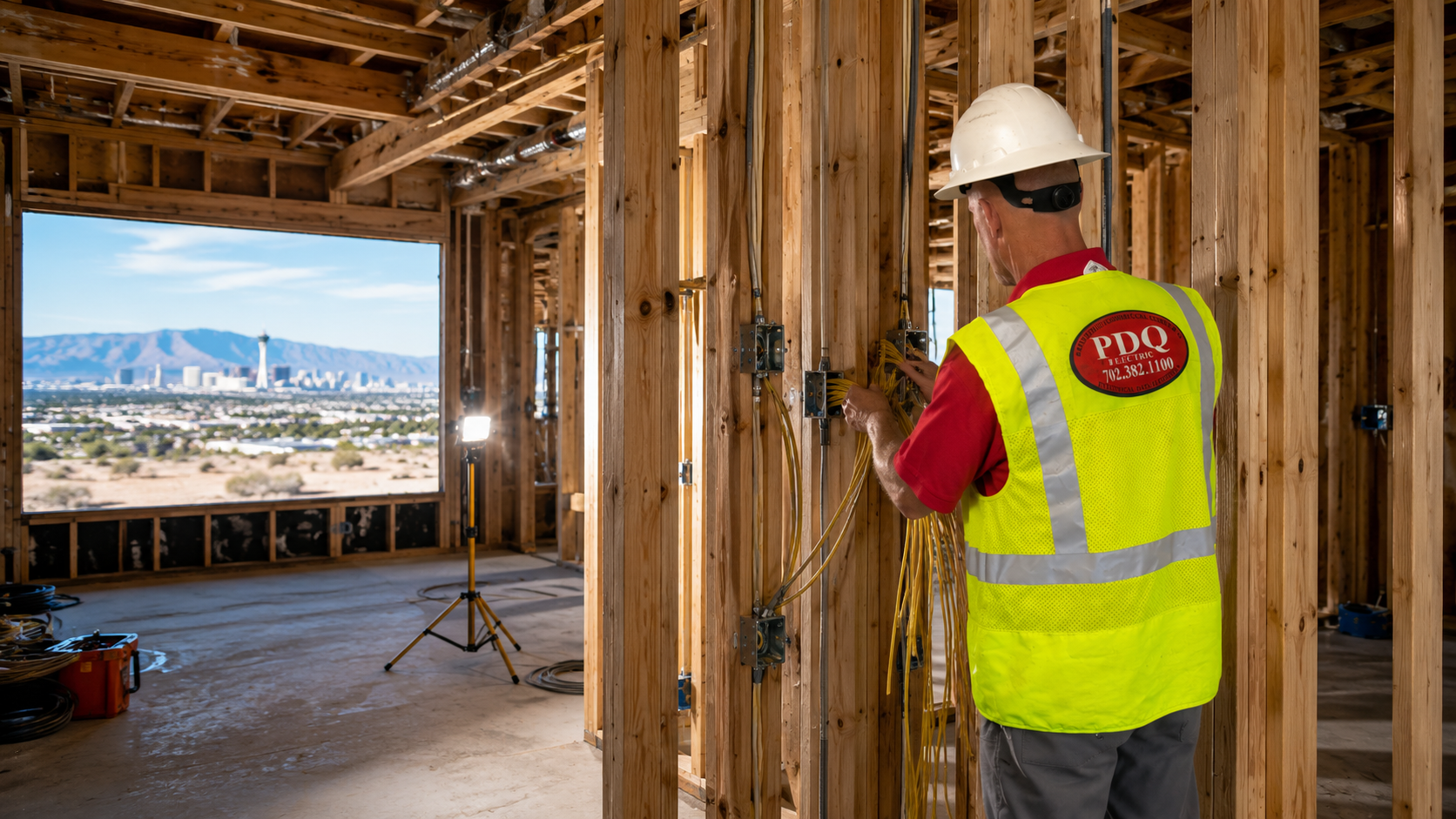

Picture this: it’s a Tuesday afternoon in July, the Strip is humming, a Summerlin office park is packed with clients, and then nothing. Lights out. Registers down. HVAC silent. For a Las Vegas business, an unexpected electrical outage isn’t just inconvenient. It’s money evaporating into the 115-degree air faster than a glass of water on the sidewalk. The good news? A solid commercial electrical maintenance plan in Las Vegas makes that scenario about as likely as a snow day in August.
A commercial electrical maintenance plan is a scheduled, documented program of inspections, testing, and servicing that keeps your business’s electrical systems safe and operational. In Las Vegas, extreme desert heat accelerates component wear, making these plans even more critical. Since 2023, NFPA 70B compliance is now mandatory and not optional for commercial facilities. Regular scheduled electrical inspections reduce electrical downtime, protect equipment, and keep businesses on the right side of Clark County regulations.
Why Las Vegas Is a Uniquely Brutal Environment for Electrical Systems
Most cities deal with weather. Las Vegas deals with *wrath-of-the-sun* weather.
Las Vegas operates within one of the most thermally demanding built environments in North America, where summer dry-bulb temperatures regularly exceed 110°F.
That kind of heat doesn’t just make people cranky. It attacks electrical infrastructure at every level.
When ambient outdoor temperatures reach 115 degrees, the temperature inside an enclosed metal electrical box can soar past 140 degrees priming the bimetallic strips inside breakers for premature failure.
And heat isn’t the only villain.
Las Vegas commercial buildings frequently experience electrical issues related to the extreme desert climate and intensive usage patterns, including premature component failure due to heat stress, particularly in outdoor equipment or inadequately cooled electrical rooms.
Add to that dust infiltration, which can cause connection and insulation problems in electrical systems, and you’ve got a recipe for serious, preventable headaches.
There’s also the city’s famous round-the-clock culture to consider.
Las Vegas’s 24/7 operational culture means many systems never experience downtime, accelerating wear and complicating maintenance scheduling.
That’s the electrical equivalent of running a marathon every single day without ever stretching.
What Is a Commercial Electrical Maintenance Plan?
Think of it like a health checkup for your building’s entire electrical nervous system except skipping it has far worse consequences than missing a dentist appointment.
Preventive maintenance is a proactive strategy that involves inspecting, testing, cleaning, and servicing electrical systems before failures occur. Instead of reacting to equipment breakdowns, businesses schedule maintenance activities at planned intervals to identify potential issues early.
A well-structured plan covers everything from circuit breakers and switchgear to wiring, grounding systems, and panel boards.
A compliant plan should define the scope of maintenance efforts by listing all relevant electrical systems and their condition, and should also define who implements the plan and is responsible for specific tasks, such as visual inspections or cleaning electrical equipment.
For Las Vegas businesses specifically, commercial electricians specializing in Las Vegas facilities understand the unique demands of desert conditions and round-the-clock operation schedules, and can recommend appropriate solutions for heat-resistant wiring, dust protection for electrical components, and systems that support 24/7 operations.
NFPA 70 Compliance and What It Means for Clark County Businesses
Here’s where things get serious in the best possible way.
Before 2023, NFPA 70B operated as a recommended practice. Today it is an enforceable standard. This shift from “should” to “shall” gives regulatory authorities, insurance carriers, and facility owners a clearer basis for evaluating maintenance programs.
In plain English: what was once friendly advice is now the law.
NFPA 70B was reclassified as an enforceable standard in 2023, and businesses that fail to follow it now risk fines, legal liabilities, and increased exposure to safety hazards.
The most significant change is that NFPA 70B is now a mandatory standard for commercial facilities, which means OSHA can use these rules to issue citations.
For Clark County businesses, that’s not a risk worth taking.
The upside?
The standard reinforces the connection between equipment maintenance, worker protection, and system reliability which is exactly the outcome every business owner wants.
What a Scheduled Electrical Inspection Should Include
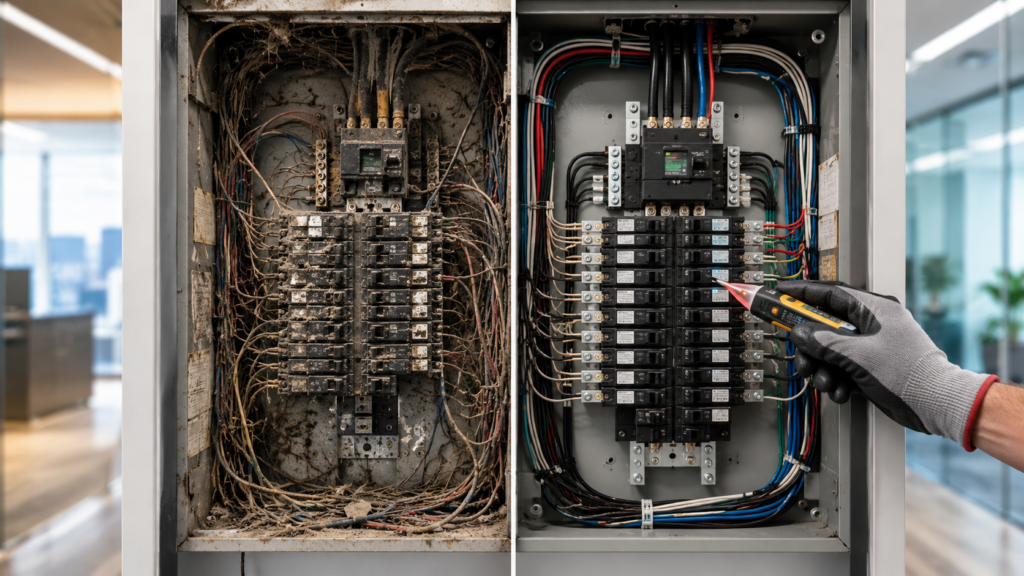
Not all inspections are created equal. A thorough scheduled electrical inspection for a Las Vegas business should go beyond a quick visual glance.
NFPA 70B defines acceptable methods of testing, such as infrared thermography, inverse time trip testing, pickup testing, relay checks, and following the manufacturer’s recommendations.
Infrared thermography deserves special attention here.
Because almost every power-carrying component generates excess heat prior to breakdown, thermal imaging has become essential for maintaining safe, reliable, and fully compliant facility operations.
Think of it as giving your electrical system an X-ray catching the problem before it becomes a crisis.
How often should inspections happen?
Based on equipment condition, visual inspections need to happen every six to 12 months, while lubrication intervals can range from 12 to 60 months.
In Las Vegas, given the desert heat electrical system wear, erring toward the more frequent end of that range is smart business.
Businesses should monitor equipment condition over time and adjust maintenance intervals based on actual operating conditions, environmental stress, and system criticality. Tracking equipment condition helps facility teams identify gradual deterioration caused by heat, dust, vibration, moisture, and electrical loading before those issues lead to failures.
How a Maintenance Plan Reduces Electrical Downtime in Las Vegas
Downtime in Las Vegas isn’t just an inconvenience, it’s a competitive liability. Here’s the straightforward math: a few hundred dollars in scheduled maintenance beats a five-figure emergency repair every single time.
Robust preventive maintenance helps avoid unexpected downtime due to malfunctions or safety hazards, and businesses often see improved efficiency and profitability as a result.
Condition-based maintenance tracking helps businesses identify equipment deterioration before failures occur, and predictive maintenance technologies improve reliability and reduce unexpected downtime.
Beyond the operational benefits, there are real cost savings attached.
Preventive maintenance can help keep equipment in good shape so it lasts longer and performs its best.
Longer-lasting equipment means fewer capital replacements, lower insurance risk, and a whole lot less stress.
Building Your Commercial Electrical Maintenance Plan: Key Steps
Getting started doesn’t have to be overwhelming. A qualified Las Vegas commercial electrician can guide businesses through the process. Here’s the general framework:
Assess and document existing systems.
The 2023 version of NFPA 70B introduces the idea of condition-based maintenance, with guidelines explaining how to categorize electrical systems into three categories based on their condition which then informs how often to conduct commercial electrical maintenance.
Assign responsibility clearly.
The Electrical Maintenance Plan must name an EMP Coordinator and ensure every maintenance worker is qualified for their specific jobs.
Schedule and stick to it.
Implementing a predictive maintenance program and engaging in continuous monitoring can help space out these intervals without sacrificing compliance or safety.
Plan for regular audits.
A formal audit of the Electrical Maintenance Plan is required at least once every five years under NFPA 70B.
But for high-demand Las Vegas environments, annual reviews are worth considering.
Frequently Asked Questions
Q: How often does a Las Vegas commercial building need an electrical inspection?
A: At minimum, visual inspections should occur every six to 12 months under NFPA 70B guidelines. Given the desert heat electrical system wear in Las Vegas where components face extreme thermal stress year-round many facility managers opt for quarterly checkups, especially before peak summer season. The condition of your specific equipment also influences frequency.
Q: Is NFPA 70B compliance required for businesses in Clark County, Nevada?
A: Yes. Since 2023, NFPA 70B is no longer just a recommendation, it’s an enforceable standard.
OSHA can use these rules to issue citations
against non-compliant commercial facilities. Clark County businesses operating without a documented Electrical Maintenance Program are exposed to fines, legal liability, and insurance complications.
Q: What’s the difference between reactive and preventive electrical maintenance?
A: Reactive maintenance means fixing things after they break, expensive, disruptive, and risky.
Businesses that rely on reactive maintenance strategies now face growing pressure to implement structured Electrical Maintenance Programs that support compliance, reduce downtime, and improve workplace safety.
Preventive maintenance flips the script entirely by catching problems early and keeping operations running smoothly.
Don’t Wait for the Lights to Go Out
Las Vegas businesses operate in one of the most demanding electrical environments in the country. The desert heat, the round-the-clock operations, the dust all of it conspires against electrical systems that don’t receive regular professional attention. A commercial electrical maintenance plan in Las Vegas isn’t a luxury item on a budget spreadsheet. It’s the foundation of a reliable, compliant, and profitable operation.
The best time to set up a scheduled electrical inspection program was last year. The second best time is right now.
Ready to protect your business from costly electrical downtime? Contact PDQ today to build a customized NFPA 70B-compliant maintenance plan tailored to your facility’s unique needs and keep the lights on where they belong.